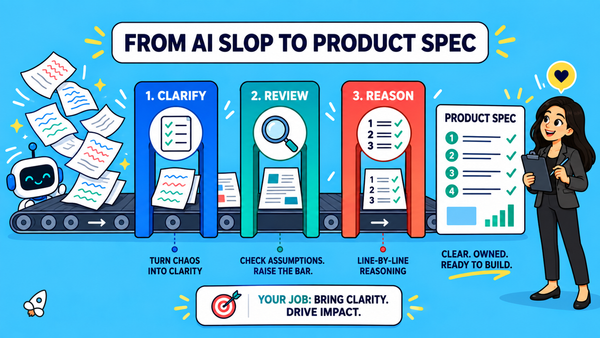
Most Useful Product Management Books in 2026
A curated PM book list that prioritizes closing your biggest skill gap this quarter—strategy, discovery, metrics, leadership, and AI.


If I had to sum up this list in one line: pick the book that fixes your biggest PM gap this quarter and use one idea from it right away.
In 2026, PM work is shifting fast. Teams are putting more money into AI, and AI agents may take on work tied to about 44% of work hours. But the job is still the same at its core: making sound calls about what to build, why it matters, how to measure it, and how to align people around it.
Here’s the short version of what this article covers:
- Core PM thinking: Inspired
- Outcome-focused product work: Escaping the Build Trap
- Weekly discovery practice: Continuous Discovery Habits
- Finding product-market fit: The Lean Product Playbook
- Choosing the right metrics: Lean Analytics
- Roadmaps that explain the why: Product Roadmaps Relaunched
- Leading teams and people: Product Leadership and How to Lead in Product Management
- Interview prep: Cracking the PM Interview
- AI judgment and shipping AI products: Co-Intelligence, Competing in the Age of AI, and Building AI-Powered Products
- Scaling PM systems: Product Operations
What I like about this list is that it does not treat every PM the same. It sorts books by skill gap and career stage:
- New PMs: discovery, prioritization, interviews
- Mid-level PMs: outcomes, discovery, metrics
- Senior PMs: leadership, team design, org systems
- AI-focused PMs: AI judgment, AI product work, AI workflow design
The main point: don’t read more just to read more. Read the book that helps you make a better call this month.
The Top 10 Best Product Management Books To Read In 2025
Quick Comparison
Book | Best use |
|---|---|
Inspired | Learn the core PM model |
Escaping the Build Trap | Shift from output to outcomes |
Continuous Discovery Habits | Build a weekly discovery rhythm |
The Lean Product Playbook | Move toward product-market fit |
Lean Analytics | Pick the right metric for the stage |
Product Roadmaps Relaunched | Turn roadmaps into communication tools |
Product Leadership | Lead teams through influence and judgment |
How to Lead in Product Management | Handle conflict, trust, and team decisions |
Cracking the PM Interview | Prepare for PM interviews |
Co-Intelligence | Learn where AI helps and where it fails |
Competing in the Age of AI | Think about AI at the company level |
Building AI-Powered Products | Ship AI products with evals and guardrails |
Product Operations | Set up repeatable PM systems at scale |
If you want the fastest path, I’d do this:
- Pick one book for strategy or discovery
- Pick one book for metrics or roadmapping
- Pick one book for leadership or AI
Then apply one framework before you move to the next book.
How to Use This Reading List
Use this section to pick the best place to start based on your skill gap and where you are in your career. Start with 1–2 books that tackle the skill gap that will help you the most this quarter. Then read with focus, not speed, and use the table below to match each book to the skill you need most right now.
These books cover eight skill areas: product strategy, discovery, analytics, roadmapping, leadership, interviewing, AI fluency, and product operations. Each one lines up with a real 2026 PM job: making better trade-offs, running stronger discovery, and using AI without giving up judgment.
Pick by level. New PMs usually need the basics first, like discovery, prioritization, and stakeholder alignment. Mid-level PMs often get the most out of discovery and strategy. Senior PMs tend to need leadership, positioning, and org design.
Don’t just read and move on. Put each idea to work in one actual product task before you pick up the next book. After a chapter on discovery, run a customer interview that same week. After reading about roadmapping, check your current roadmap against outcomes rather than features.
Here’s the fastest way to choose.
Skill Gap | Best Match |
|---|---|
Product Strategy | Escaping the Build Trap |
Discovery | Continuous Discovery Habits |
Analytics | Lean Analytics |
Roadmapping | Product Roadmaps Relaunched |
Leadership | Product Leadership |
Interviewing | Cracking the PM Interview |
AI Fluency | Co-Intelligence |
Product Operations | Product Operations: How Successful Companies Build Better Products |
With that filter in mind, scan the book list and start with the one that matches your highest-leverage gap.
A Learning Resource to Pair With These Books
After you pick your books, use this resource to put the ideas to work sooner. Reading is helpful. Applying what you read in actual product work is what changes things.
Founded by Gabriela Naumnik, Product Management Society shares blog posts, meetups, and career resources for PMs who want to use what they learn. Its AI-focused content treats AI as a core PM skill, not just an extra layer.
The meetups can help you use frameworks from Inspired and Continuous Discovery Habits inside your own org, with your own limits and team dynamics. The career resources support the move from output-focused thinking to outcome-focused work and help PMs put the ideas from this reading list into action.
Use it alongside the books below to turn reading into practice.
1. Inspired
Author: Marty Cagan | Best for: Aspiring PMs, Senior PMs, Product Leaders
Start with Inspired if you need the core mental model for product management. It still sets the baseline for how modern product teams should work.
The big idea is simple: discovery comes before delivery. In Cagan’s view, teams need to decide what to build before they start building it. Too many teams skip discovery, jump straight into delivery, and then wonder why they shipped the wrong thing. That’s why he pushes PMs to validate the problem before locking in a solution. He also makes a sharp distinction between feature teams, which move through a backlog, and empowered product teams, which own the problem and figure out the best way to solve it.
"But one of the most important lessons in our industry is to fall in love with the problem, not the solution." - Marty Cagan
One of the most useful parts of the book is the Four Risks Framework. It gives PMs a simple way to pressure-test any idea: Do customers want it? Can they use it? Can we build it? Does it work for the business? That makes it a strong tool for prioritization. If an idea can’t hold up under those four checks, it probably doesn’t deserve discovery time yet.
Inspired is the first book in Cagan’s trilogy. Read this one first if your team still skips discovery.
Who You Are | What You'll Get From It |
|---|---|
Aspiring PM | A clear model of the PM role and team dynamics |
Senior PM | Stronger discovery discipline and better collaboration |
Product Leader | A framework for team structure and fewer feature factories |
2. Escaping the Build Trap
Author: Melissa Perri | Best for: Mid-Level PMs, Senior PMs, Product Leaders
Escaping the Build Trap takes product ideas and turns them into a working system for teams that ship a lot but learn very little. Perri’s main warning is the feature-shipping machine: a team judged by output, not value. In an AI-enabled org, the danger isn’t slower delivery. It’s moving fast in the wrong direction.
That shift - from outputs to outcomes - sits at the center of the book. Perri urges PMs to stop staring at metrics like “tickets closed” or “deployment frequency” and start asking a harder question: is the product solving customer problems in a way that moves the business forward? Teams are often rewarded for shipping, so they keep shipping, even when the work doesn’t matter much.
One of the most useful ideas in the book is a four-step decision loop called the Product Kata. It helps teams stay locked in on the right problems: align on direction, define the problem, choose the opportunity, and test solutions. If your team always feels busy but can’t say with confidence that it’s working on the right things, this gives you a simple way to slow down and think.
The book also helps PMs get stakeholders on the same page around outcomes. Perri gives PMs words and frameworks they can use to get out of the “but the CEO wants it” cycle that comes from fuzzy definitions of success.
If you want a practical way to test opportunities week by week, the next book goes one layer deeper.
Who You Are | What You'll Get From It |
|---|---|
Mid-Level PM | A clear path from execution to strategic thinking |
Senior PM | Frameworks to align stakeholders around outcomes, not features |
Product Leader | A blueprint for building a product-led organization |
3. Continuous Discovery Habits
Author: Teresa Torres | Best for: Mid-Level PMs, Senior PMs, AI Product Managers
If Inspired helps shape how you think and Escaping the Build Trap sharpens the outcome focus, Continuous Discovery Habits gives teams a weekly operating rhythm. The book tackles a common problem: teams treat discovery like a one-time project instead of a weekly habit the team owns together.
At the center of the book is the Opportunity Solution Tree (OST). It connects outcomes, opportunities, and solutions in one clear path. That makes roadmap calls much easier to explain to stakeholders, because each initiative ties back to a real customer opportunity.
Torres also reworks how teams handle interviews. Instead of asking users which features they want, she pushes teams toward behavior-based interviews. Prompts like "Tell me about the last time you faced this problem" help teams learn what people actually did, not what they think they might want in theory or which feature they’d ask for on the spot.
This matters even more in 2026. Teams can ship faster now, which means weak discovery gets expensive fast. AI can speed up mockups and code, but that also means teams can rush into the wrong thing with more speed than ever. That’s why discovery discipline matters more, not less. Use this weekly cadence to test opportunities before moving into deeper solution design in the next book.
Who You Are | What You'll Get From It |
|---|---|
Mid-Level PM | A repeatable weekly habit that replaces ad hoc research |
Senior PM | A structured way to tie roadmap decisions to customer outcomes |
AI Product Manager | A framework for checking whether AI is actually the right solution before committing to an expensive AI POC |
4. The Lean Product Playbook
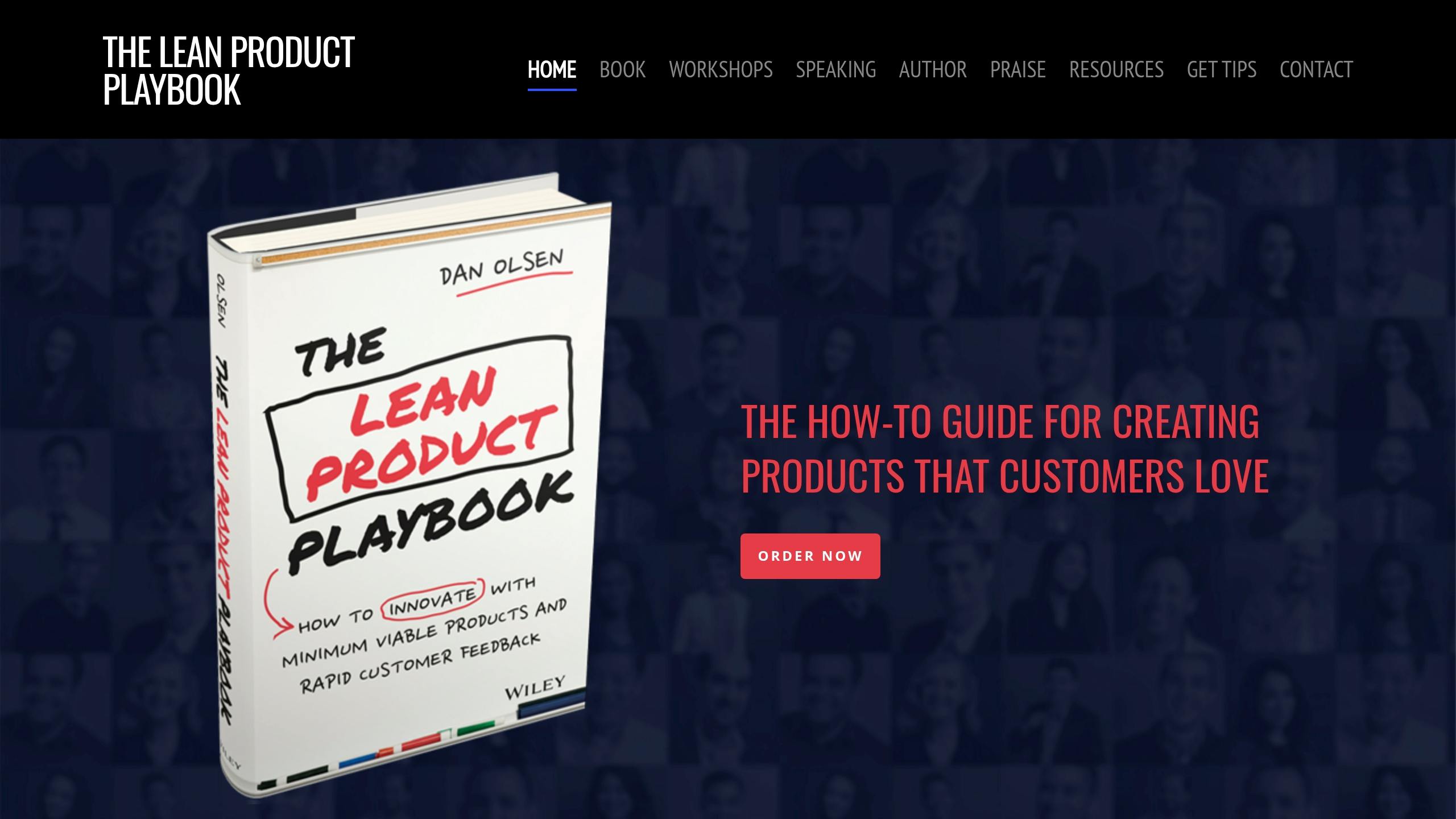
Author: Dan Olsen | Best for: Aspiring PMs, Junior PMs, Mid-Level PMs, Career Changers
If Continuous Discovery Habits gives you a steady discovery rhythm, The Lean Product Playbook gives you a clear path to product-market fit. It connects day-to-day discovery work with early validation, so PMs can move from customer research to testing what to build first.
The Lean Product Process has six steps: identify your target customer, uncover underserved needs, define your value proposition, specify an MVP, build a prototype, and test it with customers. That flow helps teams check the problem before writing code and avoid building too much, which matters even more now that AI has made shipping much faster. Once the MVP is live, the next thing to figure out is simple: is it working?
Use the Value Proposition Canvas to sharpen the customer need and value proposition.
Who You Are | What You'll Get From It |
|---|---|
Aspiring PM | A repeatable process for PMF from the start |
Junior/Mid-Level PM | A clear way to turn roadmap requests into testable hypotheses |
Career Changer | Core PM language and frameworks |
If you need a process for finding the right product, start here. If you need a way to measure whether it works, the next book is a better fit.
5. Lean Analytics
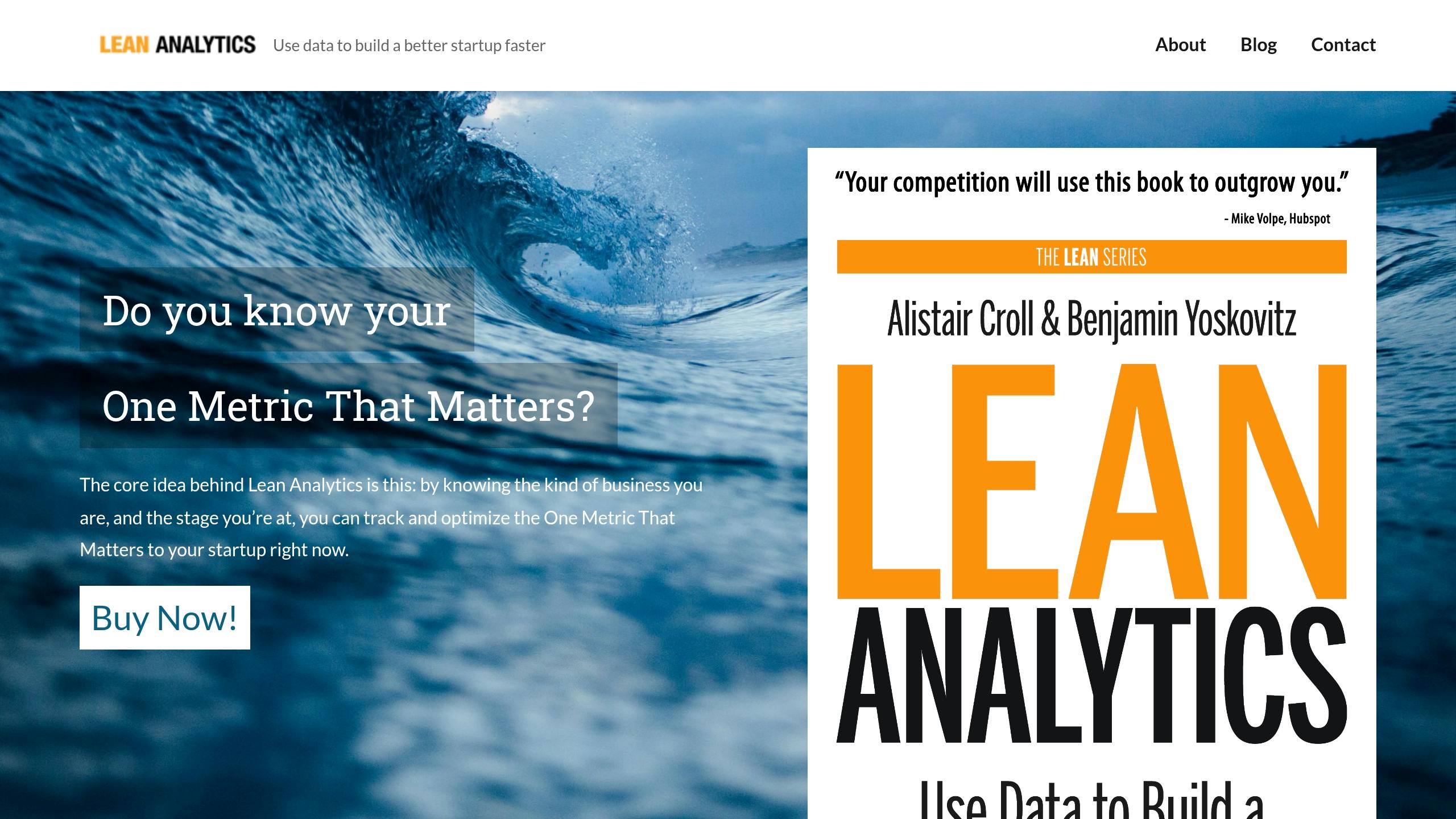
Authors: Alistair Croll & Benjamin Yoskovitz | Best for: Junior PMs, Mid-Level PMs, Growth PMs
If your product is already in the market, Lean Analytics helps you answer the question that matters most: is it working? That’s why it fits so well after The Lean Product Playbook. Once you’ve moved past validation, the focus shifts to measurement.
At the heart of the book is the One Metric That Matters (OMTM). The idea is simple: your team should rally around one metric at a given time. That keeps people from getting distracted by vanity metrics and points everyone toward the number most likely to move the product ahead. You can also use AI to summarize data and spot patterns faster, which can help you make better product calls.
The other big strength here is its stage-based framework. Before you pick KPIs, you first identify the product stage: Empathy, Stickiness, Virality, Revenue, or Scale. That sounds simple, but it changes a lot. It helps you measure the right thing instead of polishing the wrong number. And when roadmap debates get tense, that kind of stage clarity gives you a much stronger case.
Who You Are | What You'll Get From It |
|---|---|
Junior PM | A practical framework for choosing the right metrics |
Mid-Level PM | A simple method for aligning stakeholders around one shared metric |
Growth PMs | Stage-appropriate guidance for measuring what matters most |
Lean Analytics works best when you're in charge of tracking product performance and already have enough data to use. Pair it with a North Star Finder or a metrics library to tie your OMTM to your business model. Once that metric is clear, the next book shows how to turn it into roadmap decisions.
6. Product Roadmaps Relaunched
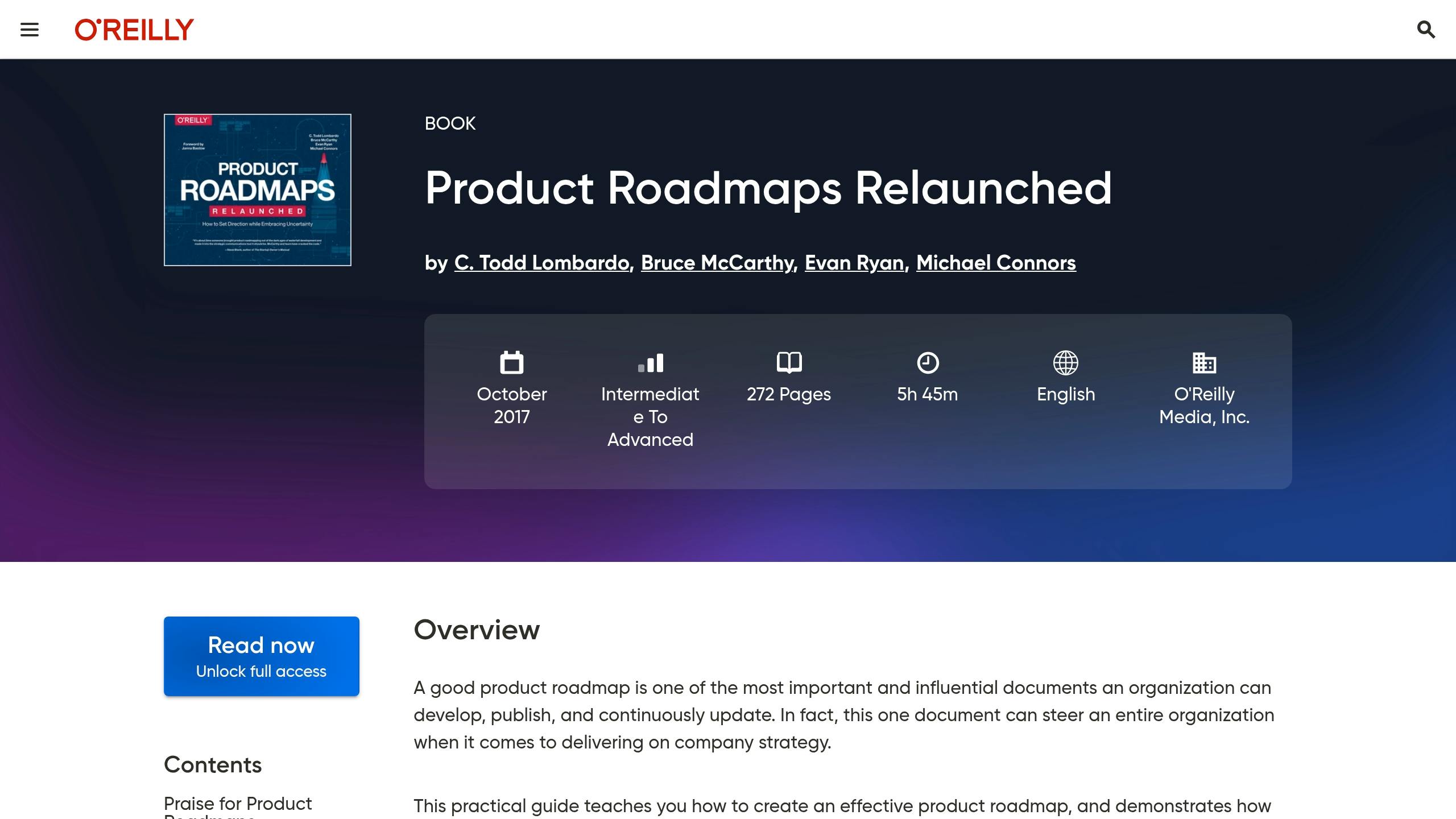
Authors: C. Todd Lombardo, Bruce McCarthy, Evan Ryan & Michael Connors | Best for: Aspiring PMs, Senior PMs, Product Leaders
If Lean Analytics helps you decide what outcome to move, this book helps you get everyone moving in the same direction. Once you know the outcome that matters, the next job is getting the team, stakeholders, and leadership aligned around it. Product Roadmaps Relaunched recasts the roadmap as a strategic communication tool that explains the why behind each initiative, not just the what and when.
One of the biggest shifts in the book is simple but powerful: move from feature lists to themes. Instead of stacking the roadmap with individual features, group work around customer needs and the problems you’re trying to solve. That helps you avoid turning the roadmap into a feature factory. It also gives your team more room to adjust when priorities shift.
The authors also lay out a three-layer information structure: primary (vision), secondary (confidence levels and target customers), and complementary (project details and dependencies). It’s a clean way to keep the roadmap readable for different audiences without stuffing every detail into one view.
A new edition updated for the AI era is also available.
Audience | Key Habit to Apply |
|---|---|
Aspiring PMs | Group initiatives by customer needs using themes and subthemes |
Senior PMs | Co-create roadmaps and prioritize by evidence before finalizing them |
Product Leaders | Shift the organization from fixed-date promises to an adaptive roadmap model |
7. Product Leadership
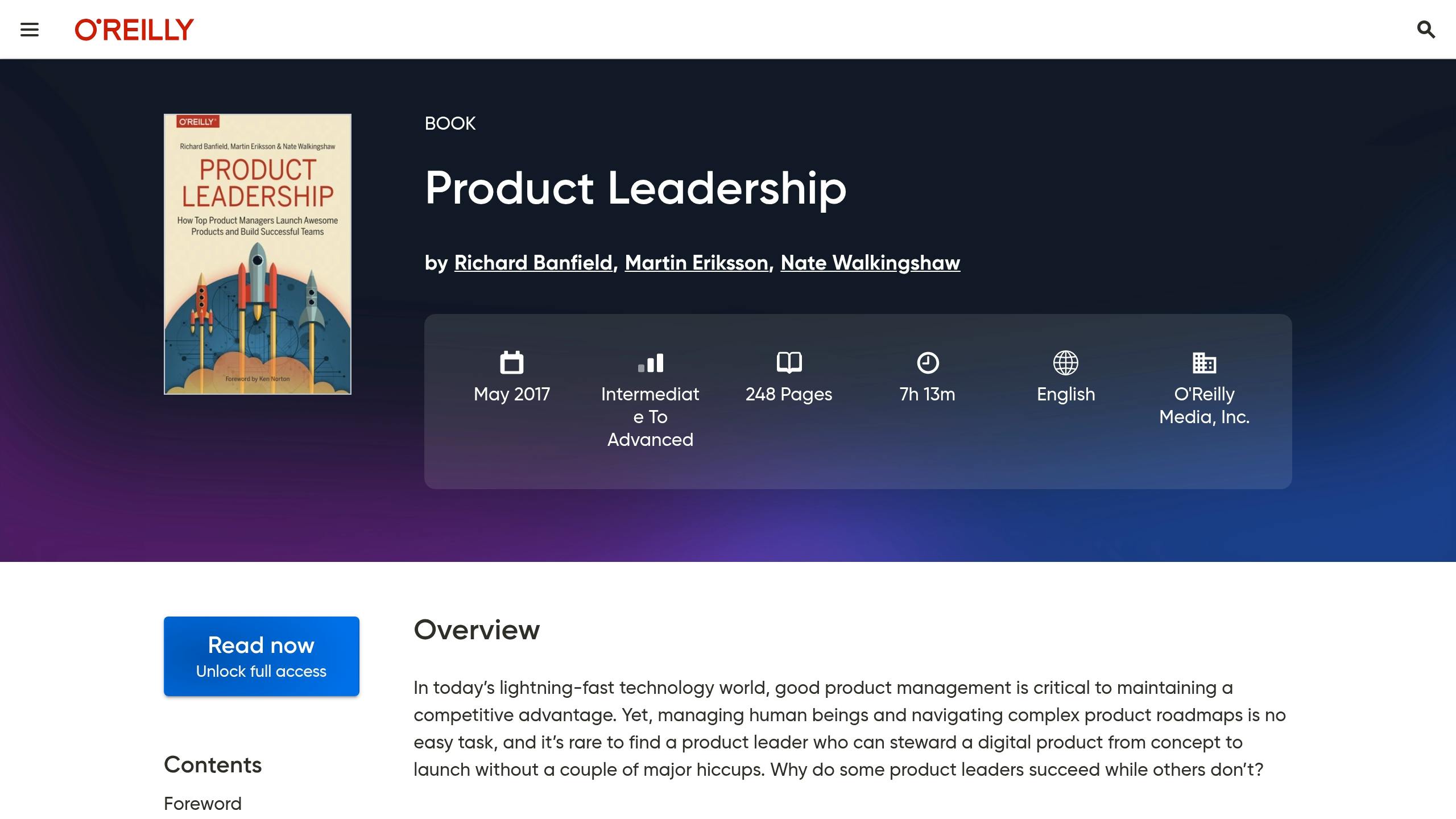
Authors: Richard Banfield, Martin Eriksson & Nate Walkingshaw | Best for: Senior PMs, Group PMs, Product Leaders
Once teams know what to build and how to measure it, the next challenge is leading people through the work. For senior PMs, the job starts to change. It becomes less about the mechanics of execution and more about judgment, influence, and helping other people do their best work. Product Leadership is about leading product teams, especially when PMs move into management or broader leadership roles where their impact comes from guiding others, not just shipping work themselves.
As execution gets faster, leadership matters more. The bottleneck shifts to alignment, judgment, and delegation. With AI agents taking on more execution work in 2026, the ability to lead without formal authority, align teams, and hand off decisions well becomes even more important.
Audience | Key Habit to Apply |
|---|---|
Senior PMs | Align cross-functional teams around shared outcomes without formal authority. |
Group PMs | Delegate decision rights openly and assign high-stakes, ambiguous problems to senior ICs. |
Product Leaders | Build team capability, trust, and ownership instead of managing process oversight. |
If your next step is interview prep or a role change, the next book moves from leadership to hiring.
8. How to Lead in Product Management
Author: Roman Pichler | Best for: Aspiring PMs, Senior PMs, Product Leaders
If Product Leadership is about leading at the team level, this book gets into the day-to-day conversations that make that leadership work.
Pichler zooms in on the people side of product management: listening, conflict, alignment, and resilience. A lot of PM books lean hard on frameworks and process. This one takes a different path. It focuses on how to lead through conversation, especially when you're dealing with stakeholder tension, priority fights, and who owns the final call.
The most useful framework here is the Behavioral Change Stairway. Follow it in order:
- active listening
- empathy
- rapport
- influence
- behavior change
Don't skip steps. That's the whole point.
Pichler also walks through decision rules for group choices, including when to use unanimity, consent, or delegation. That helps cut down on gray areas and makes it easier to get buy-in. He also covers nonviolent communication, mindfulness, and self-awareness so PMs can handle conflict without getting pulled off balance.
Here’s where each reader should focus.
Audience | What to Focus On |
|---|---|
Aspiring PMs | Build trust through listening |
Senior PMs | Move hard stakeholder conversations forward |
Product Leaders | Lead through empowerment, not control |
If leadership is the bottleneck, the next book turns to hiring and interview performance.
9. Cracking the PM Interview
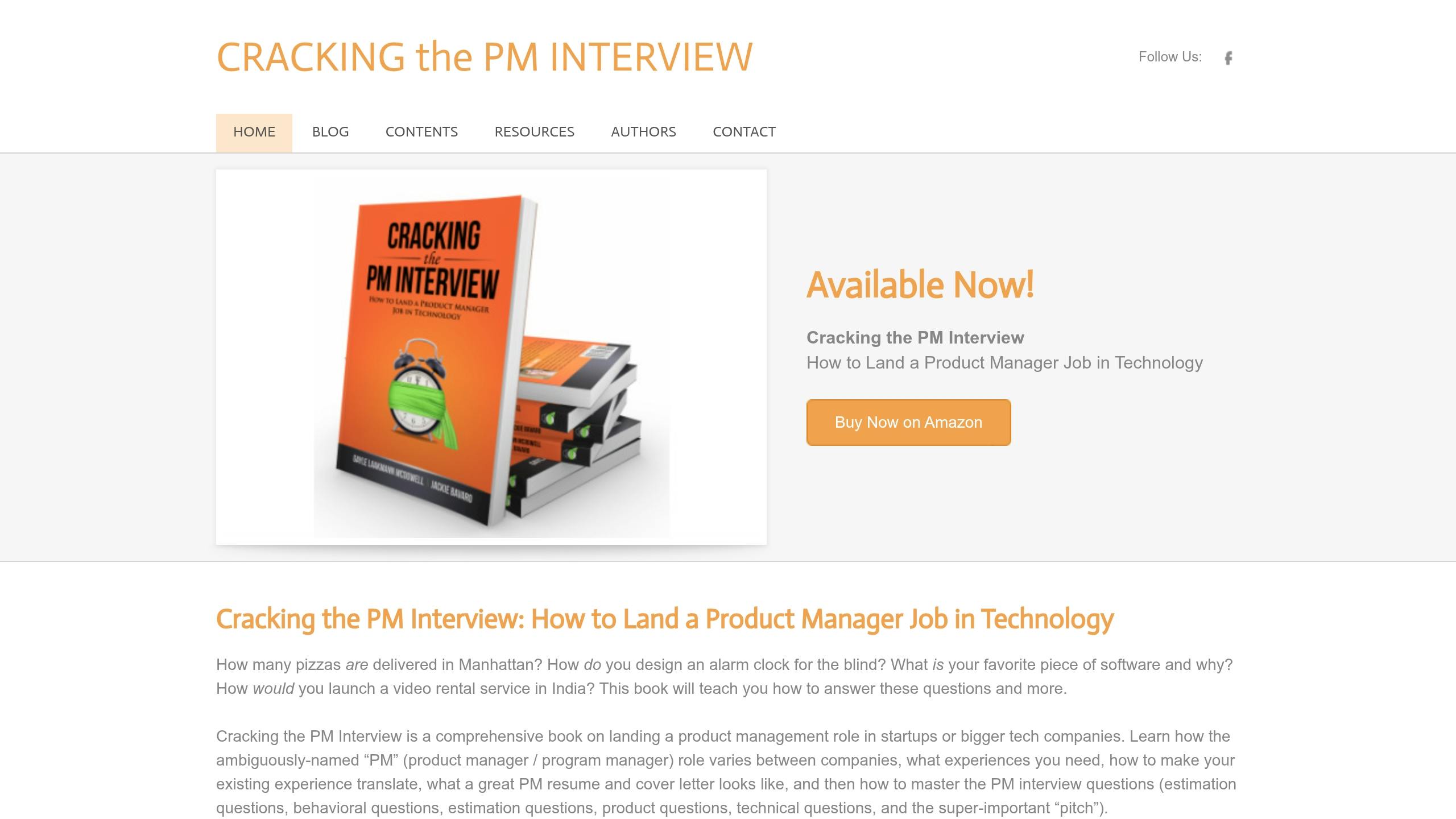
Authors: Gayle Laakmann McDowell & Jackie Bavaro | Best for: Aspiring PMs, Career Switchers, Early-Career Product Managers
If you need to land a PM role, start here. This is the main prep book for entry-level PM, APM, and career-switcher interviews.
It walks through the core PM interview rounds: behavioral, product design, estimation, and technical. The table below helps you match each round to the skill you need to build most.
In 2026, the interview bar still comes down to the same things: structured thinking, trade-offs, and stakeholder judgment. This book helps you get better at the thinking and communication interviewers want to see.
Start with your weakest interview skill and study that section first.
Interview Round | What the Book Helps You Build |
|---|---|
Product Design | Structured thinking and trade-off reasoning |
Estimation | Breaking down ambiguous problems with clear logic |
Behavioral | Clear storytelling about your experience |
Strategy | Connecting market context to product decisions |
Once you’ve covered the interview basics, the next book shifts to using AI in day-to-day product work.
10. Co-Intelligence
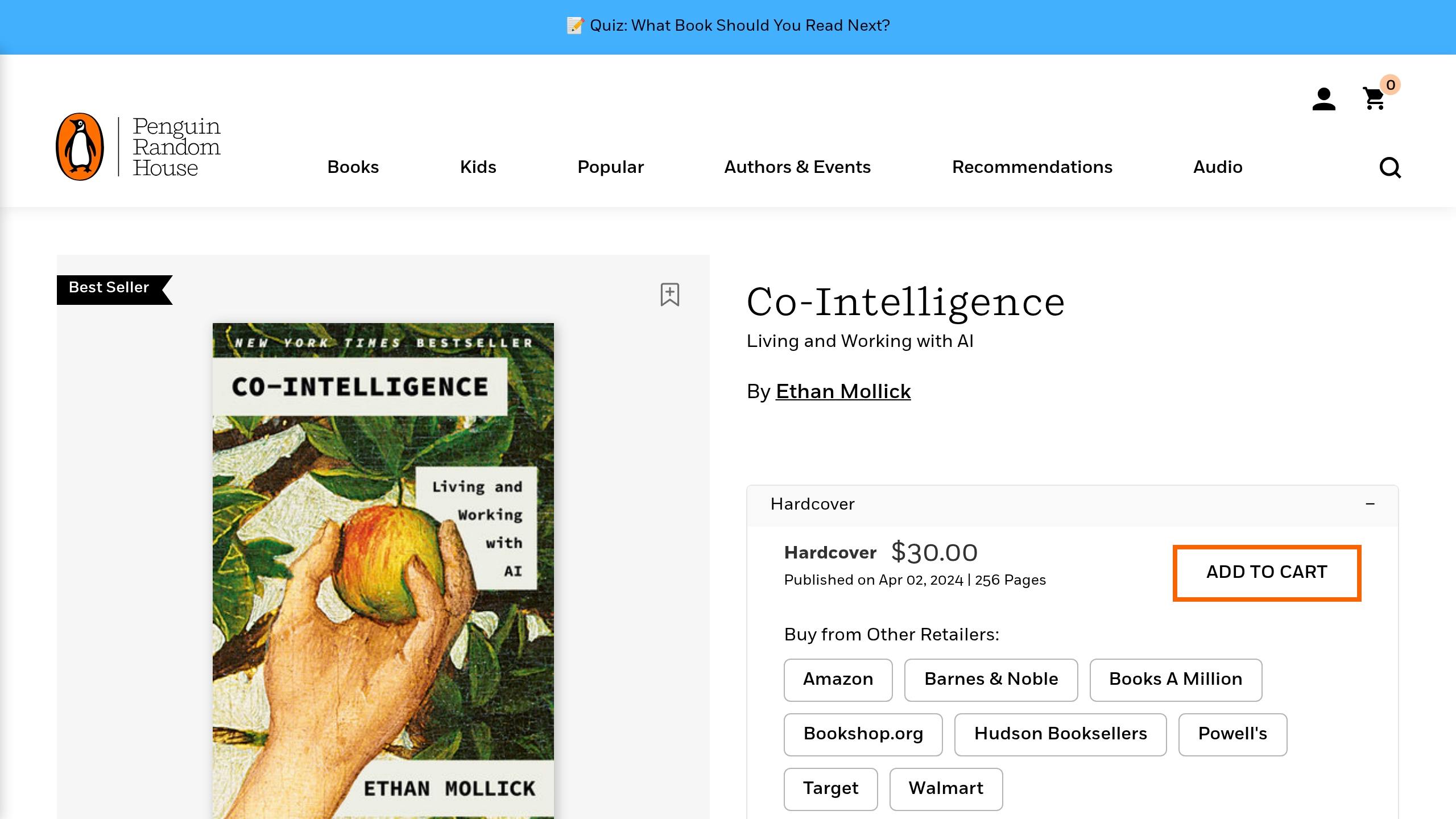
Author: Ethan Mollick (Wharton School) | Best for: Mid-Career PMs, PMs New to Generative AI
After strategy, discovery, and leadership, this is the AI fluency book for PMs. Co-Intelligence is the shortest path to building better AI judgment. Mollick, a Wharton professor, bases the book on GPT-4 experiments from Wharton's Generative AI Labs.
The big idea for PMs is the jagged frontier: the line between what AI does well and where it can fail out of nowhere. For product teams, that makes scoping AI features much more grounded. It also helps teams spot where human review still matters.
Mollick also gives PMs a simple way to think about workflow design. In centaur mode, the human and AI divide the work across separate subtasks. In cyborg mode, they work together inside the same task, like drafting a PRD in real time. He also frames AI as a coworker, tutor, expert, or future self. That gives PMs a practical way to decide when to use AI for brainstorming, learning, review, or pressure-testing decisions.
Mollick's rule is simple: bring AI into the work, keep a human in the loop, and expect the tool to keep getting better.
Concept | PM Application |
|---|---|
Jagged Frontier | Evaluate which AI features are safe to ship vs. prone to quiet failure |
Centaur Mode | Delegate discrete subtasks to AI, such as data cleanup or draft generation |
Cyborg Mode | Interleave AI into creative work, such as real-time PRD drafting |
AI as Expert | Simulate specialist feedback from Legal, Engineering, or UX perspectives |
Read this before Building AI-Powered Products. It gives you the AI judgment that book turns into shipping tactics.
11. Competing in the Age of AI
Authors: Marco Iansiti and Karim R. Lakhani (Harvard Business School) | Best for: Senior PMs, AI Product Managers, Product Leaders
Once you’ve learned how to use AI in your day-to-day work, it helps to zoom out and look at the operating model behind it. Competing in the Age of AI gives PMs that bigger-picture view. At the center of the book is the AI factory: a data pipeline, an experimentation platform, algorithm development, and software infrastructure that can scale. In 2026, AI changes how companies compete at the operating-model level, not just through the features they release.
For PMs, the value here is clear. The book gives you a way to design AI-enabled workflows from the ground up. Instead of asking where AI can be added, the AI factory lens pushes a better question: what does the full workflow need to look like for AI to work in practice? That shift matters. It means checking data readiness, experimentation loops, and workflow design before kicking off AI work. The main lesson is straightforward: redesign workflows before adding AI features.
There’s one catch. The examples lean toward large tech companies, so smaller teams will need to adjust the framework to fit their own setup.
Here’s how different readers can use it.
Audience | Primary Application |
|---|---|
Product Leaders | Designing AI-ready operating models and organizational structures |
Senior PMs | Moving from feature-level AI to system-level workflow redesign |
AI Product Managers | Understanding data pipeline and experimentation platform requirements |
Aspiring PMs | Building foundational literacy on how AI reshapes competitive dynamics |
Next, move from AI strategy to AI product execution in Building AI-Powered Products.
12. Building AI-Powered Products
Author: Dr. Marily Nika (former GenAI Product Lead at Google and Meta) | Best for: Aspiring PMs, Senior PMs, AI Product Managers, Product Leaders
The earlier AI books help you build judgment and understand how teams operate. This one is more about shipping AI products safely.
That shift matters. AI product work needs a different toolkit because PRDs, roadmaps, and A/B tests don't go as far when you're dealing with non-deterministic systems.
The most useful part is the evaluation design framework. It gives PMs a clear way to think through three layers of evaluation: offline evals, golden datasets, and human-in-the-loop scoring. That's the kind of structure teams need when model behavior can drift, fail quietly, or sound confident while being wrong.
Beyond evaluation, the book walks through the full AI Product Development Lifecycle (AIPDL), from opportunity assessment to rollout. It also includes practical tools PMs can use right away, like an AI Opportunity Worksheet, a Build-vs-Buy Matrix, an AI-specific PRD template, and an AI Agent Questionnaire for setting autonomy and safety boundaries. On top of that, it helps PMs build the technical fluency needed to work well with ML engineers and data scientists.
The section on agentic workflows feels especially timely for 2026. By then, 62% of organizations were already experimenting with AI agents. The book covers multi-step AI workflows and the guardrails needed to stop confident lies and toxic hallucinations before launch.
There is one caveat: this is best as a fast overview of the GenAI product lifecycle, not a deep manual for highly technical readers. That still makes it useful. In 2025, 98% of PMs said they were using AI at work, but only 39% had received job-specific AI training.
Framework | What It Helps You Do |
|---|---|
AI Opportunity Worksheet | Assess organizational readiness and user impact before starting development |
Build-vs-Buy Matrix | Decide whether to build custom models or use third-party APIs |
Evaluation Design Framework | Validate model quality using offline evals, golden datasets, and human-in-the-loop scoring |
AI PRD Template | Document requirements for features with non-deterministic behavior |
AI Agent Questionnaire | Define autonomy, feedback loops, and safety boundaries for agentic workflows |
Next: Product Operations shows how to scale the systems behind product work.
13. Product Operations: How Successful Companies Build Better Products
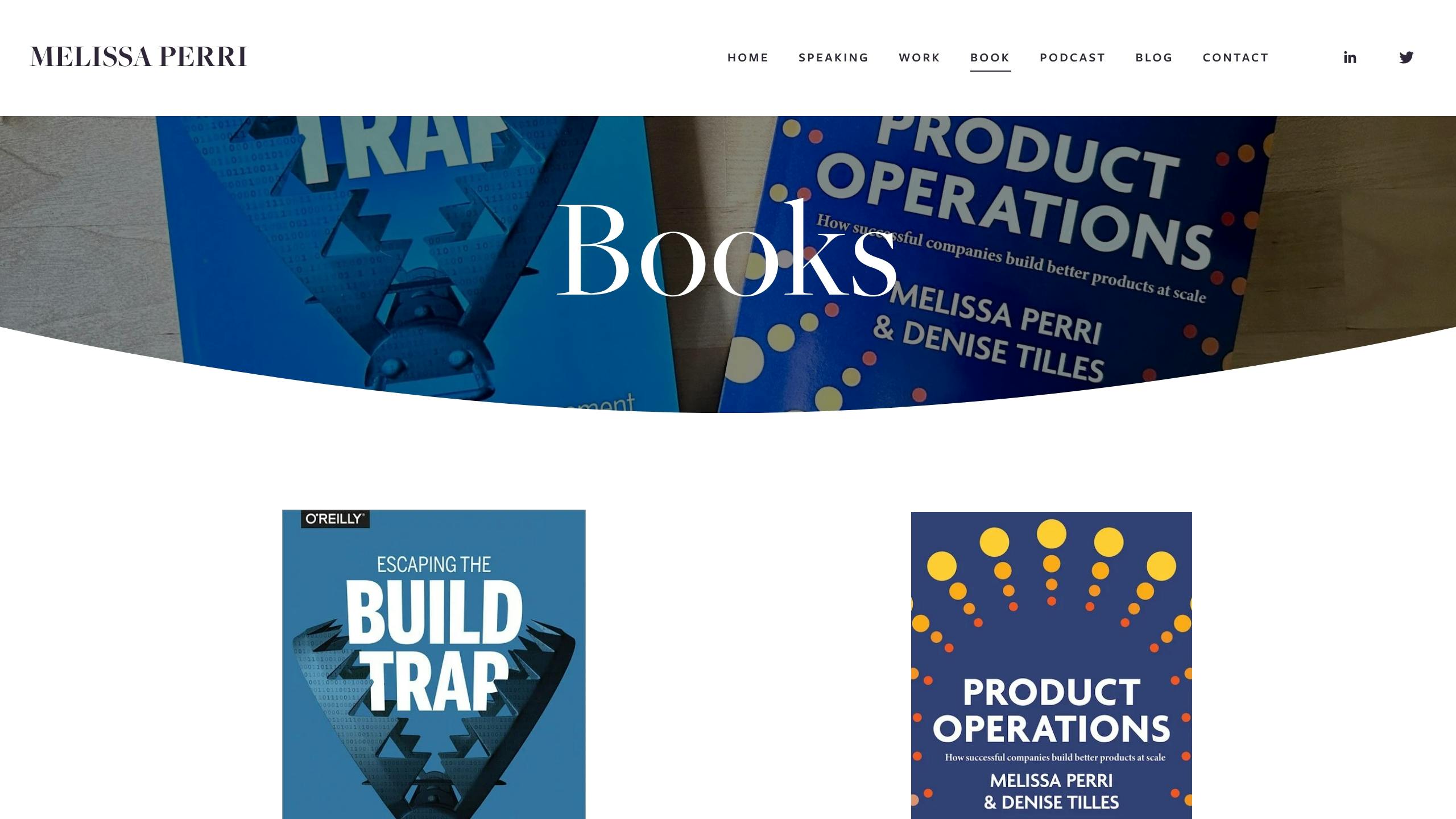
Authors: Melissa Perri and Denise Tilles | Best for: Product Leaders, Product Ops Specialists, and Executives at scaling companies
This book is built for teams that are growing fast and feeling the strain. It shows how to organize product decisions, prioritization, and execution without turning the whole function into chaos. If your team already has strategy and discovery habits in place, this is the next step: making those habits repeatable as the company scales.
At its core, Product Ops helps product teams scale by giving them the inputs they need to set strategy, prioritize work, and operate with consistency. The book breaks that work into three pillars:
- Business Data and Insights
- Customer and Market Insights
- Process and Governance
That structure gives teams a clear way to standardize inputs, set governance, and build repeatable workflows across the product function. One of the most useful ideas in the book is the standardized toolkit approach. Instead of every team rebuilding the same docs and templates from scratch, they work from shared starting points: a Discovery Toolkit, a Strategy Toolkit, and a GTM Toolkit.
That matters even more in 2026. AI is making execution faster, but speed without shared rules can get messy fast. Teams can ship more, but they also need tighter operating norms. And with only 3 out of 10 product managers currently spending time on strategy, the focus on governance and shared process feels especially timely for teams dealing with faster, more complex delivery cycles.
The book also includes implementation stories from Stripe, Uber, athenahealth, Oscar Health, and Fidelity. That makes the ideas feel grounded. You’re not just getting theory on a page; you’re seeing how companies put these systems to work when scale starts to test every part of the product org.
Use the comparison tables below to match this book to your current skill gap.
Book Comparison Tables by Skill Area
These books line up with different PM skill gaps. The idea is simple: pick the book that fits the problem you have right now, not the one that just sounds interesting.
Skill Area | Top Recommendation | Key Framework |
|---|---|---|
Strategy | Escaping the Build Trap | Outputs to outcomes; Product Kata |
Discovery | Continuous Discovery Habits | Opportunity Solution Tree |
Metrics | Lean Analytics | One Metric That Matters (OMTM) |
Roadmapping | Product Roadmaps Relaunched | Outcome-based roadmaps that adapt as uncertainty changes |
AI | Co-Intelligence | The Jagged Frontier |
Product Operations | Product Operations | Using AI in product operations |
For AI-focused readers, the choice breaks down into three buckets: AI judgment, AI execution, and AI operating models.
Title | Best For | Key Concept |
|---|---|---|
Co-Intelligence | AI judgment for any PM | The Jagged Frontier |
Building AI-Powered Products | Shipping GenAI features | Evaluation design |
Competing in the Age of AI | AI operating model | AI-driven system redesign |
The next section maps these books to your career stage.
Reading Paths by Career Stage
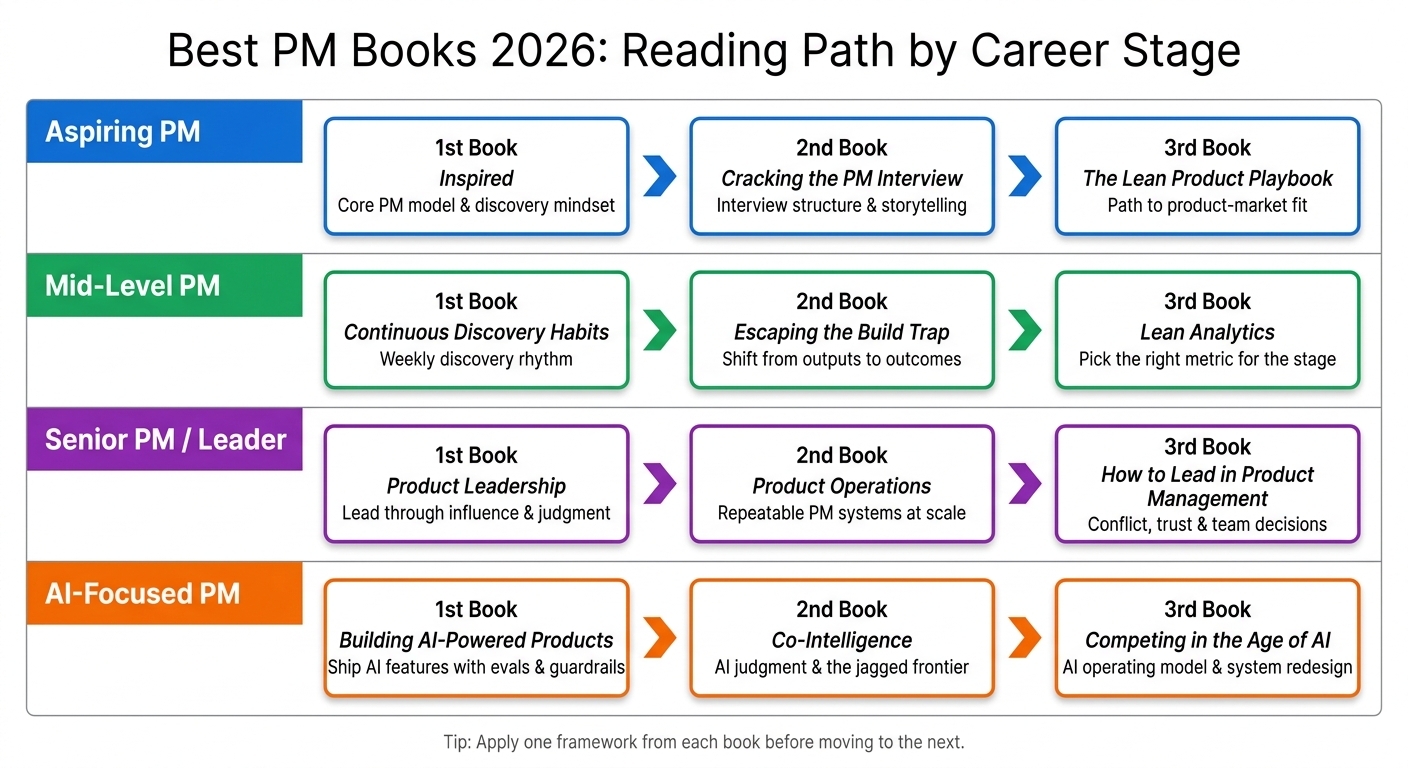
The comparison table covered what to read. This section focuses on when to read it.
Pick your next book based on your career stage, not hype or whatever people on LinkedIn happen to be talking about this week.
Career Stage | 1st Book | 2nd Book | 3rd Book |
|---|---|---|---|
Aspiring PM | Inspired | Cracking the PM Interview | The Lean Product Playbook |
Mid-Level PM | Continuous Discovery Habits | Escaping the Build Trap | Lean Analytics |
Senior PM / Leader | Product Leadership | Product Operations | How to Lead in Product Management |
AI-Focused PM | Building AI-Powered Products | Co-Intelligence | Competing in the Age of AI |
For AI-focused PMs, the sequence matters. Start with AI execution first, then build AI judgment, and only after that zoom out to the operating model.
Conclusion
The thread running through all of these categories is simple: better judgment beats more process.
A framework is only useful if it helps you make better calls. If it doesn’t, it turns into theater. That’s why these books lean toward outcomes, judgment, and systems thinking instead of rigid step-by-step formulas.
A simple way to use this list:
- Pick one strategy book
- Pick one discovery or analytics book
- Pick one leadership or AI book
Then take one idea from each and put it to work before you move on. Use the tables to choose your next book, then start reading.
FAQs
Which PM book should I read first?
It depends on where you are in your career and what you’re working through right now:
- New to PM: Start with Inspired by Marty Cagan. It gives you a strong base in modern product management and helps you understand what good product work looks like.
- Building AI literacy: Pick up Co-Intelligence by Ethan Mollick. It’s a short, research-tested intro to generative AI that’s easy to follow without feeling watered down.
- In a leadership role: Read The Making of a Manager by Julie Zhuo. It’s especially helpful when you’re moving from individual contributor work into managing people.
How do I choose books for my PM level?
Choose books based on the skill you need right now or the stage of your career you’re in, not just the title on your LinkedIn profile.
If you’re new to product, start with Inspired and The Mom Test. They help you build the basics: how to think like a PM, talk to users, and avoid building on bad assumptions.
If you’re a mid-level PM, go with Continuous Discovery Habits and Escaping the Build Trap. These books are great when you’re trying to get better at steady discovery work and making sure your team solves the right problems, not just ships features.
For senior PMs and leaders, Obviously Awesome, Product Leadership, and Measure What Matters make more sense. At that level, the job usually shifts from managing tasks to shaping positioning, guiding teams, and tying product work to outcomes.
If AI is your focus, read Co-Intelligence first, then The AI Product Playbook. That order works well because it gives you the broader picture before you get into product-specific AI decisions.
The main thing is to pick one growth area at a time. Then put the ideas to work as soon as you can. Reading helps, but the learning sticks when you use it on an actual project.
Which book is best for AI product management?
There isn’t one best book. The right pick depends on what you need in 2026.
- The AI Product Playbook is a practical guide that links AI theory to day-to-day product management.
- Strategic AI Product Leadership is a strong fit for leaders focused on enterprise strategy and ROI.
- AI Meets Strategy is useful if you want to build trustworthy AI with data governance and ethical frameworks.
If you’re finding this blog valuable, consider sharing it with friends, or subscribing if you aren’t already. Also, consider coming to one of our Meetups and following us on LinkedIn ✨ And check out our official website.
Connect with the founder on LinkedIn. 🚀
About the Product Management Society
The Product Management Society is an international community for product managers, founders, designers, and career-switchers, with 2,400+ members across active chapters in Lisbon, Berlin, Frankfurt, and Mexico City. The community runs more than 50 in-person meetups per year, a Slack network, an invite-only WhatsApp group, a blog, and a growing suite of free tools for product leaders. More information is available at www.productmanagementsociety.com.
About Gabriela Naumnik
Gabriela Naumnik is an AI product leader and the founder of the Product Management Society. A Staff Product Manager working at the intersection of AI and enterprise product, she focuses on AI-powered platforms serving Fortune 500 companies. She is a regular speaker at product conferences, publishes on product management at the Product Management Society's blog, and has built the PM Society into one of the most influential product communities in Europe and Latin America. She holds a B.S. from NYU/NYU Shanghai and an M.S. from Columbia University. More information is available at gabriela-naumnik.com.