How AI Is Changing PM Mentorship
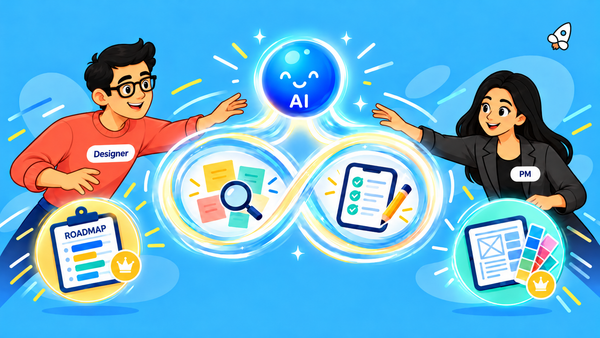
AI speeds and scales PM mentorship with real-time feedback and routine support, while humans keep judgment for high-stakes decisions.

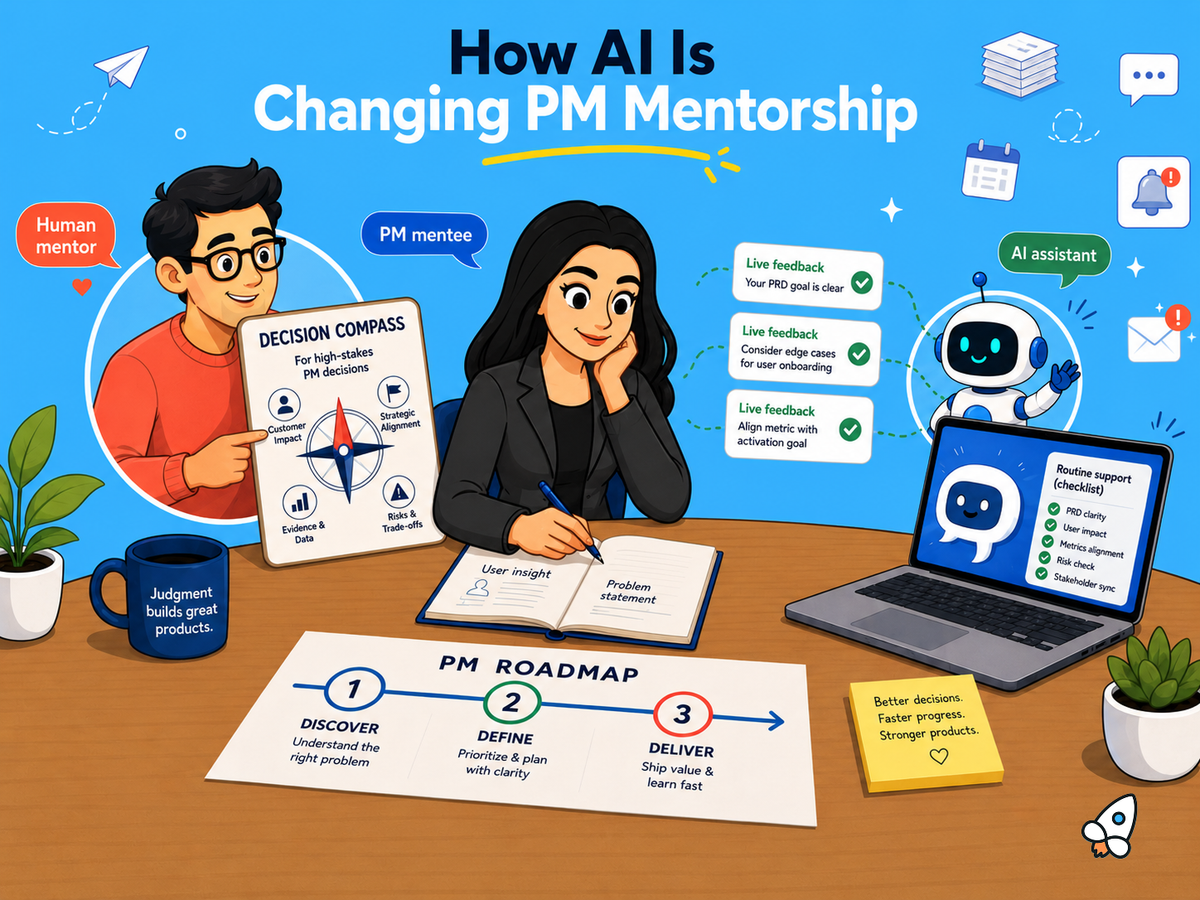
Will product managers be replaced by AI as PM mentorship falls behind the job? AI skill demand in PM roles grew about 7x from 2024 to 2026, 70% of startup PMs already use AI at work, but fewer than 15% have training on how AI systems behave.
Here’s the short version: if you’re a PM, AI can help fill the gap between mentor meetings. It can give you in-the-moment feedback, point out skill gaps, and help you practice decisions before you bring them to a person. But it should handle the production layer - drafts, summaries, feedback triage - not the judgment layer like career calls, team politics, and hard tradeoffs.
What this means for you:
- Mentorship is too slow for AI product work
- PMs need new skills, like spotting model failure and checking risky output
- AI can support day-to-day coaching between mentor sessions
- Human mentors still matter most for trust, context, and hard decisions
- The best setup is hybrid: AI for routine support, people for judgment
If I had to sum it up in one line: AI makes PM mentorship easier to scale, but people still give it depth.
The Problem: Where PM Mentorship Falls Short
Limited Access, Slow Feedback, and Generic Advice
Mentorship starts to crack when PMs need feedback faster and more tailored than a mentor can provide. In AI product work, teams run steady experiments and test models at a pace that slow mentor feedback just can’t match.
There’s also a deeper issue. AI products are probabilistic, which means PMs need help reading model behavior, spotting failure modes, and thinking through risk - not just managing execution or keeping teams aligned.
Why AI-Specific PM Skills Expose These Gaps Even More
This gap gets even more obvious in AI product work. Most product managers are now expected to understand how the underlying AI works, what kinds of risks come with it, and what it takes to reduce those risks.
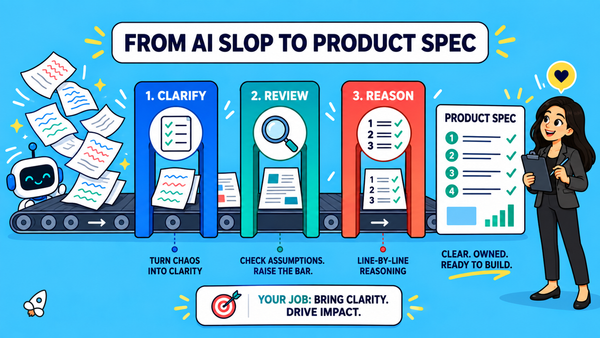
But the training gap is plain: fewer than 15% of startup PMs have been trained on AI behavior modeling, even though 70% already use AI tools for work like feedback synthesis. That mismatch matters. If no mentor can show a PM how to build an evaluation set or spot hallucinations, it’s easy to confuse polished output with sound judgment.
And there’s another catch. When AI writes PRDs and summarizes research, junior PMs get fewer reps at building judgment themselves. That’s the space where AI-supported mentorship starts to help.
How AI Is Changing PM Mentorship
AI fills the gaps between mentor sessions by helping PMs while the work is happening. Instead of waiting for the next scheduled chat, PMs can get guidance right when they need it. That makes mentorship feel more immediate and starts to shift how judgment gets built over time.
AI-Assisted Mentor Matching and Conversational Support
One of the clearest changes shows up in how PMs get matched with mentors. In many cases, old-school matching depends on small networks and manual pairing. AI-driven matching looks at skills, goals, and working style to surface pairings that fit better.
Beyond matching, AI tools can also act like conversational coaching partners. A PM might pressure-test their thinking on a roadmap call, product tradeoff, or tough decision with AI before taking it to a human mentor. Used well, that kind of support works best when it's tied to a structured development plan.
PM Mentorship: Before and After AI
That shift changes mentorship across four areas:
Standard Mentorship | AI-Supported Mentorship | |
|---|---|---|
Speed | Scheduled 1:1s; slow feedback loops | On-demand; just-in-time support during the work |
Personalization | Based on mentor's experience | Adaptive; uses mentee data and goals to map specific skill gaps |
Scalability | Limited by human availability | High; AI handles routine queries and admin tasks |
Human Involvement | Essential for all interactions | Focused on high-stakes decisions, trust, and empathy |
Feedback Loop | Delayed; feedback arrives in scheduled sessions | Instant feedback on writing, tone, and reasoning |
AI takes care of routine support. Human mentors step in for high-stakes decisions, context, empathy, and judgment. The next step is to put that split to work inside a structured learning plan.
What Good AI-Supported PM Mentorship Looks Like in Practice
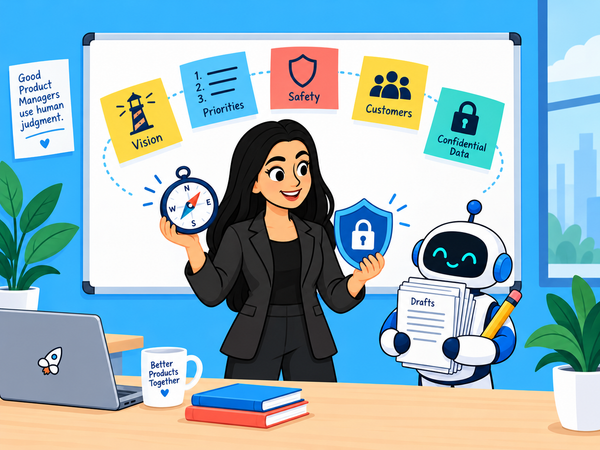
AI should fill the gaps between mentor sessions, not replace mentors. The best setup combines AI’s speed with human judgment. That only works when the mentorship model is built around that split, so PMs learn when to trust AI, when to question it, and when to override it.
Personalized Learning Plans Tied to Real PM Work
Good learning plans start with skill gaps, not a generic course catalog. AI can spot role-based areas for growth, suggest a path that fits the PM’s work, and adjust that path as progress changes.
The aim is to use AI for the first 40% to 50% of a draft before a mentor shapes the final version. A simple way to think about it is the Simulate, Automate, Delegate model: simulate workflows with AI, automate repeat tasks, then delegate bigger workstreams with human oversight. The plan should also match the PM’s target role.
Real-Time Feedback, Progress Tracking, and Reflection
Once the plan is in place, AI can keep feedback moving between mentor check-ins. This is where speed matters most. A PM can use AI to review tone, logic, and clarity before a mentor steps in. AI copilots can cut spec writing and research time by 15% to 30%, but human review still matters because false positives still happen.
That’s why strong mentorship systems build in evaluation habits. Keep a reference set. Manually review outliers and edge cases. Otherwise, AI can smooth over the very signals that matter most.
Progress tracking should bring together check-ins, goals, and feedback signals so mentors can read growth in context, not just look at output.
Why the Hybrid Model Works Best
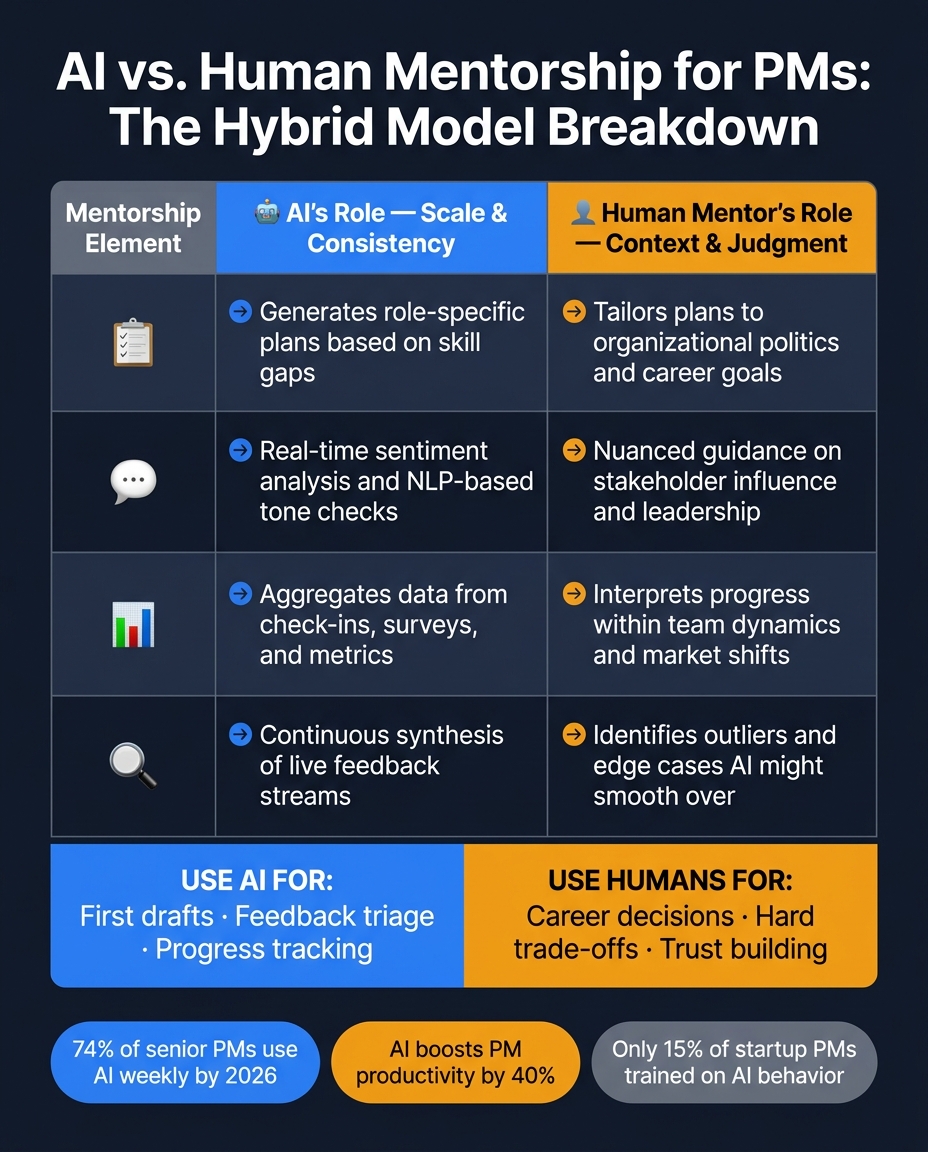
AI brings scale, consistency, and 24/7 support. Human mentors bring empathy, context, and the judgment that comes from handling org politics and high-stakes calls.
In practice, the split looks like this:
Mentorship Element | AI's Role (Scale & Consistency) | Human Mentor's Role (Context & Judgment) |
|---|---|---|
Learning Plans | Generates role-specific plans based on skill gaps | Tailors plans to specific organizational politics and career goals |
Feedback | Real-time sentiment analysis and NLP-based tone checks | Provides nuanced guidance on stakeholder influence and leadership |
Progress Tracking | Aggregates data from check-ins, surveys, and metrics | Interprets progress within the context of team dynamics and market shifts |
Signal Review | Continuous synthesis of live feedback streams | Identifies outliers and edge cases that AI might smooth over |
Conclusion: AI Makes PM Mentorship More Scalable, but Humans Make It Meaningful
PM mentorship has always run into the same wall: too little mentor time, slow feedback, and advice that can feel broad when what you need is specific. AI helps on all three fronts. It makes guidance faster, more tailored, and available when you need it instead of when someone finally has a free 30 minutes. By 2026, 74% of senior PMs use AI every week, and generative AI has been reported to boost PM productivity by 40% by automating routine documentation and feedback analysis. That hybrid setup fixes the scale problem. The harder part is making sure mentorship still feels human. So the question isn’t whether AI helps. It’s where AI should stop and human mentors should step in.
As AI handles more of the output work, the value of judgment goes up. For PMs, that shifts growth away from pure speed and toward the quality of decisions. That’s a big deal. But it also makes one thing clear: the toughest part of mentorship still belongs to people.
Human mentors still do the work AI can’t. They help with stakeholder politics, messy trade-offs, and career calls that depend on context, timing, and trust built over time. The practical move is simple: use AI for the production layer - first drafts, feedback triage, and progress tracking - and save human mentor time for the judgment layer - career decisions, hard trade-offs, and the trust that builds over time. AI can scale mentorship. Humans are the ones who give it weight.
For PMs navigating AI-driven growth, Product Management Society offers events, insights, and community for PMs navigating AI-driven growth.
FAQs
When should I ask AI instead of a mentor?
Use AI for execution, synthesis, and drafting - especially in the early stages. It’s well suited for summarizing research, brainstorming options, and tightening up a problem statement when your thinking is still a bit messy.
Bring in a human mentor when the work calls for judgment, empathy, accountability, hard trade-offs, ethical limits, or tense stakeholder dynamics. In uncertain situations - especially ones with people, politics, or risk involved - a human should make the final call.×
What AI skills do PMs need most now?
PMs need to move past basic tool use and build strong judgment plus solid technical fluency.
The skills that matter most are data and AI literacy, a clear grasp of how models behave, and an understanding of performance metrics. PMs also need to get comfortable making probabilistic decisions. That means working with uncertainty instead of waiting for perfect answers.
Just as important, they need firm ethical and regulatory oversight. That includes transparency, privacy, and bias mitigation. With these skills in place, PMs can spend more time on higher-value work, like system thinking and framing hard problems that don't have simple answers.
How can I use AI without weakening my judgment?
Treat AI like a tool for execution and analysis, not a stand-in for strategy. Do the hard thinking first. Set up the problem, sort through the raw research, and make sense of what matters before you ask AI to polish a draft or help find patterns.
That order matters. If you skip the thinking and go straight to the tool, you can end up with clean-looking output built on weak assumptions. AI can help sharpen ideas, but it shouldn't decide what the problem is or what the work is trying to solve.
Just as important, review every output with a critical eye instead of treating it like the final word. Push on it a bit. Use challenge prompts to look for flaws, edge cases, blind spots, or missing context.
Where could this fail?
What assumptions is this making?
What's missing from this answer?
What would someone on the other side argue?
Those kinds of checks help you spot weak logic before it turns into a bad call. AI can speed up parts of the process, sure, but the final judgment - including decisions, trade-offs, and risk - still belongs to you.
If you’re finding this blog valuable, consider sharing it with friends, or subscribing if you aren’t already. Also, consider coming to one of our Meetups and following us on LinkedIn ✨ And check out our official website.
Connect with the founder on LinkedIn. 🚀
About the Product Management Society
The Product Management Society is an international community for product managers, founders, designers, and career-switchers, with 2,400+ members across active chapters in Lisbon, Berlin, Frankfurt, and Mexico City. The community runs more than 50 in-person meetups per year, a Slack network, an invite-only WhatsApp group, a blog, and a growing suite of free tools for product leaders. More information is available at www.productmanagementsociety.com.
About Gabriela Naumnik
Gabriela Naumnik is an AI product leader and the founder of the Product Management Society. A Staff Product Manager working at the intersection of AI and enterprise product, she focuses on AI-powered platforms serving Fortune 500 companies. She is a regular speaker at product conferences, publishes on product management at the Product Management Society's blog, and has built the PM Society into one of the most influential product communities in Europe and Latin America. She holds a B.S. from NYU/NYU Shanghai and an M.S. from Columbia University. More information is available at gabriela-naumnik.com.